
Make Every Tool Earn Its Place
A small kitchen does not need to limit the meals you can prepare. The key is choosing tools that serve more than one purpose, fit neatly into available storage, and are comfortable to use regularly. Instead of collecting every gadget, focus on dependable essentials that help with chopping, cooking, measuring, storing, and cleaning.
The best small-kitchen tools are simple, durable, and easy to access. A few well-chosen items can handle most everyday tasks while keeping counters clear and cabinets organized.
Essential Preparation Tools
Preparation often takes up the most time, so start with tools that make chopping, slicing, and mixing easier.
1. A Good Chefs Knife
A chefs knife is one of the most useful tools in any kitchen. It can chop vegetables, slice fruit, mince herbs, and prepare meat or other ingredients. Choose a comfortable knife with a blade length that feels easy to control. For many home cooks, an 8-inch knife offers a good balance of cutting power and maneuverability.
You may also want a small paring knife for peeling and trimming. If storage is limited, keep one chefs knife and one paring knife rather than a large knife set.
2. A Compact Cutting Board
Choose a cutting board that provides enough room for daily preparation without taking over the counter. A medium-sized board is often a practical choice for a small kitchen. Look for one with a stable surface and a design that is easy to clean.
A board with a handle or a hanging hole can be stored on a wall or inside a cabinet door. If possible, select a board that is reversible so both sides can be used.
3. Nesting Measuring Cups and Spoons
Measuring tools are useful for baking, sauces, dressings, and portioning ingredients. Nesting sets take up much less space than separate pieces. Look for measuring cups with clear markings and spoons that fit together securely.
A liquid measuring cup can be helpful as well, especially for soups, drinks, and recipes that use larger amounts of water or milk. A compact cup with a handle and easy-to-read markings should be enough for most kitchens.
4. A Box Grater or Flat Grater
A grater can handle cheese, vegetables, citrus zest, and other ingredients. A four-sided box grater offers several surfaces but can be bulky. In a very small kitchen, a flat grater may be easier to store in a drawer.
Choose a model with a comfortable grip and a stable base. Some graters can rest over a bowl, which saves counter space and reduces cleanup.
Cooking Tools That Save Space
The right cooking tools can replace several single-purpose gadgets. Prioritize items that work with different ingredients and cooking methods.
5. One Reliable Skillet
A versatile skillet can be used for sautéing vegetables, frying eggs, searing food, warming leftovers, and making one-pan meals. A medium-sized skillet is often large enough for two or three servings without being difficult to store.
A skillet with a comfortable handle and a lid is especially useful. The lid helps retain heat, reduce splattering, and finish foods more efficiently. If you have an induction or electric cooktop, check that the skillet is compatible before buying it.
6. A Medium Saucepan
A saucepan is useful for cooking grains, heating soup, making sauces, boiling eggs, and preparing smaller portions of pasta. Choose one with a lid and a shape that fits easily on your cooktop.
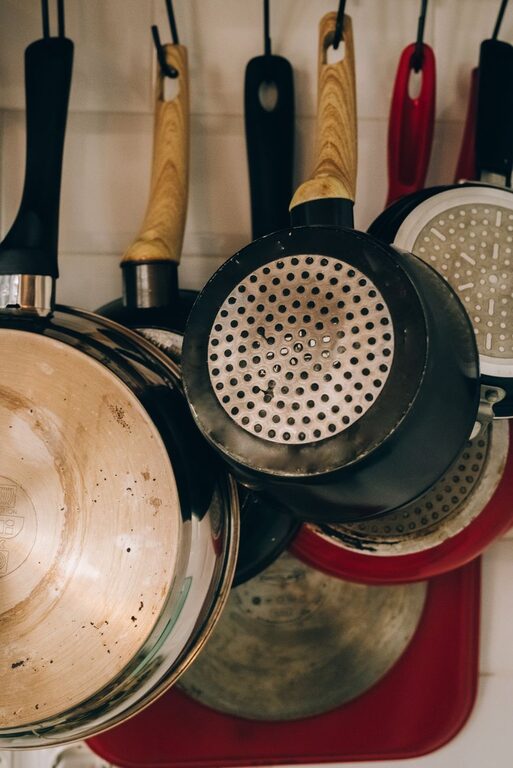
A medium saucepan can handle many tasks without requiring a separate pot for every recipe. If your storage is tight, select cookware that can be stacked or hung.
7. One Larger Pot
Even a small kitchen benefits from one larger pot for pasta, soup, stew, steamed vegetables, and batch cooking. A medium stockpot is usually more practical than a very large model, which can be heavy and difficult to store.
A pot with sturdy handles and a matching lid is easier to move and more efficient to use. Some pots can be stored inside one another, helping you save cabinet space.
8. A Baking Sheet
A rimmed baking sheet supports more than baking cookies. It can be used for roasting vegetables, preparing one-pan dinners, reheating food, and catching drips under other dishes.
Choose a size that fits your oven and leaves enough room for air to circulate. If your cabinets are narrow, store the sheet upright beside a cutting board or inside a slim gap near the oven.
Small Tools With Many Uses
Several compact tools can make everyday cooking easier without adding much clutter.
- Silicone spatula: Useful for stirring, scraping bowls, folding ingredients, and lifting food from pans.
- Wooden or heat-safe spoon: Helpful for stirring soups, sauces, grains, and one-pot meals.
- Tongs: Useful for turning food, serving pasta, and handling hot ingredients without using several utensils.
- Vegetable peeler: A small peeler quickly handles potatoes, carrots, apples, and other produce.
- Can opener: Choose a compact manual model that opens cans smoothly and stores easily.
- Kitchen scissors: These can cut herbs, packaging, parchment, and other items. Use a pair designed for kitchen work and keep it clean.
A whisk can also be valuable for eggs, dressings, gravies, and batters. If space is especially limited, choose a small whisk that fits in a utensil drawer or container.
Tools for Mixing and Measuring
A set of nesting mixing bowls is a smart choice for a small kitchen. Bowls can be used for preparing ingredients, mixing batters, serving food, and storing leftovers. Select a set that stacks securely and includes at least two or three different sizes.
A colander is another practical item. It can drain pasta, rinse produce, and wash grains. A collapsible colander is useful when cabinet space is limited, while a compact stainless steel model may last for many years.
For more precise cooking, consider a digital kitchen scale. It takes up little space and can help with baking, portioning, and measuring ingredients that are difficult to measure with cups. Look for a slim model that can be stored in a drawer.
Storage Tools for a Tidy Kitchen
Storage tools are just as important as cooking tools when space is limited. Clear containers with matching lids can keep dry ingredients fresh and make it easier to see what you have. Choose a few useful sizes rather than buying a large collection.
Stackable containers help use vertical cabinet space. Square or rectangular containers often fit more efficiently than round ones. A small collection of reusable bags or flat food storage wraps can also help reduce the number of containers you need.
Hooks, magnetic strips, and shelf risers can improve storage without requiring new cabinets. A magnetic strip may hold knives, while hooks can store measuring cups or utensils. Use these solutions only where they are safe and convenient, keeping sharp tools away from busy walkways.
How to Choose the Right Tools
Before buying a new kitchen item, ask yourself three questions:
- Can it perform more than one useful task?
- Will it fit comfortably in my available storage?
- Will I use it often enough to justify the space?
Quality also matters. A durable tool that works well is usually more valuable than several inexpensive items that are difficult to use or replace quickly. Pay attention to comfortable handles, easy cleaning, and materials suited to your cookware.
Finally, keep the tools you use most often within easy reach. Store occasional items higher up or farther back, and remove anything you never use. With a carefully selected collection, even the smallest kitchen can be organized, efficient, and ready for everyday cooking.
About the Author